Artificial intelligence capabilities continue to develop across customer experience, operations, creative work, analytics, and governance. In this article, we review five trends and the practical questions organizations should consider before implementation.
Key Insight: AI adoption should begin with a defined business need, appropriate data, human oversight, and a practical way to evaluate results.
1. Hyper-Personalization at Scale
AI-assisted personalization can help organizations tailor experiences when supported by suitable data, customer expectations, and privacy controls:

Personalization systems can organize relevant customer data into
useful segments and recommendations.
Machine learning models can analyze customer data across multiple touchpoints to support individualized experiences, subject to appropriate privacy and data-use controls:
- Pricing and offer support - Recommendations based on permitted inputs, business rules, and appropriate review
- Personalized product recommendations - Suggested from relevant behavioral and product data
- Customized marketing messages - Generated by AI and tested across channels automatically
Successful personalization depends on clear consent, useful data, appropriate safeguards, and ongoing human review.
Implementation Challenges
While the benefits are clear, many organizations struggle with:
- Data integration across siloed systems
- Privacy concerns and regulatory compliance
- Change management for customer-facing teams
Our recommendation is to start with a specific use case (like email personalization) before expanding to more complex implementations.
2. AI-Assisted Business Processes
AI-assisted workflows may reduce repetitive work while preserving appropriate review, escalation, and accountability:
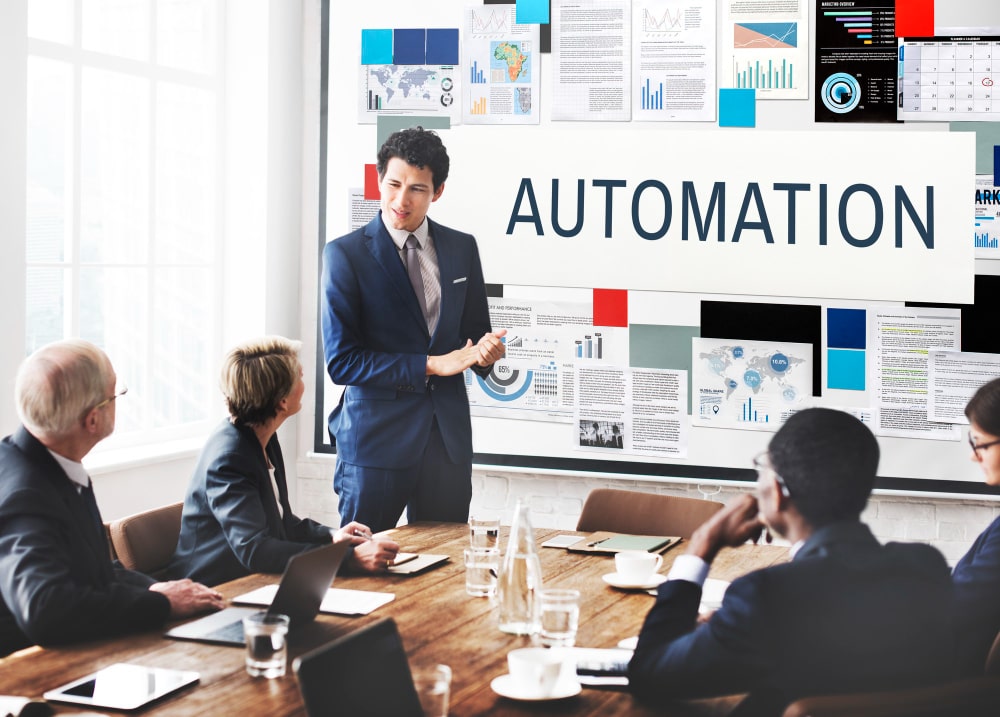
Depending on the use case and controls, relevant systems may help teams:
- Evaluate supply-chain and routing options
- Draft or route customer-service responses
- Flag unusual operational records for human review
Routing systems can combine delivery patterns, weather data, and traffic conditions, but they still require operational controls and human escalation paths.
Technical Deep Dive: How Workflow Agents Work
Modern workflow agents can combine several AI technologies under defined controls:
# Simplified workflow agent architecture
class BusinessAgent:
    def __init__(self):
        self.llm = LargeLanguageModel()
        self.decision_engine = ReinforcementLearner()
        self.monitor = AnomalyDetector()

    def execute_process(self, inputs):
        plan = self.llm.generate_plan(inputs)
        while not process_complete:
            action = self.decision_engine.select_action(plan)
            result = execute(action)
            if self.monitor.detect_issues(result):
                self.request_human_intervention()
            update_plan_based_on(result)
        return final_output
3. AI-Augmented Creativity
Contrary to fears about AI replacing human creativity, we're seeing a surge in collaborative creativity tools:
These systems enhance human creativity by:
- Generating draft design variations for review
- Predicting audience response to creative concepts
- Automating repetitive aspects of creative workflows
Creative teams may use these tools to explore variations and reduce repetitive work while retaining human review over quality, originality, and brand suitability.
4. Predictive Enterprise Intelligence
Forward-looking organizations are moving beyond descriptive analytics to predictive intelligence systems:

These systems combine:
- Real-time data streams from across the enterprise
- Advanced time-series forecasting models
- Scenario simulation capabilities
Forecasts should be validated against relevant data, monitored after deployment, and presented with clear limitations so decision-makers can use them appropriately.
5. Ethical AI Governance
As AI adoption grows, so does the focus on responsible implementation:
Responsible AI programs may include:
- Implementing AI ethics review boards
- Developing explainability frameworks
- Auditing models for bias and fairness
Regulatory developments and customer expectations continue to increase the importance of documented governance, risk assessment, and accountability.
Key Takeaways
- Personalization has evolved from marketing tactic to core business strategy
- Agent-assisted processes can improve efficiency but require careful oversight
- AI enhances rather than replaces human creativity
- Validated predictive analysis can support planning and scenario evaluation
- Ethical considerations are now central to AI implementation
These trends make careful planning increasingly important. Organizations should evaluate each use case against their objectives, data readiness, operational constraints, and risk requirements before implementation.